Wednesday, March 27, 2013

Carbon Nanotubes making Holograms

Researchers from the University of Cambridge's Department of Engineering have demonstrated the novel utilisation of carbon nanotubes for making high resolution holograms.

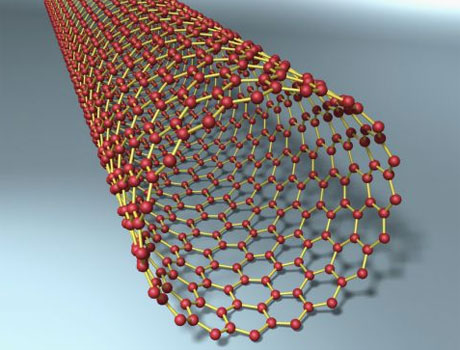
Carbon nanotubes - a manmade material - have been the focus of an enormous amount of research during the last decade due to their extraordinary electrical and optical properties. These tubes are many times thinner than a wavelength of visible light which makes them promising candidates for being used as pixels.

Read more at: http://phys.org/news/2013-03-high-res-holograms-carbon-nanotubes.html#jCp

Labels: ,

Friday, September 25, 2009

New research may lead to revolutionary new devices

Credit: Adam Tsen, Cornell University
Dr. Jiwoong Park of Cornell University, who receives funding for basic research from the Air Force Office of Scientific Research (AFOSR), is investigating carbon nanostructures that may some day be used in electronic, thermal, mechanical and sensing devices for the Air Force.

"Devices that are required in many of the Air Force missions are somewhat different from commercial ones in the sense that they are often exposed to harsh environments while maintaining their maximum performance," Park said. "Carbon-based nanostructures, including carbon nanotubes and graphenes (thin layers of graphite) present many exciting properties that may lead to new device structures."

Park's team of researchers is examining single molecules, nanocrystals, nanowires, carbon nanotubes and their arrays in an effort to find a "bridging" material that has a stable structure for making molecular-level bonds. In addition, they are seeking an effective tool for resolving functional and structural challenges. If successful, they will be able to apply the research to future technological advances.
Park's research may contribute to the discovery of new electronic and optical devices that will revolutionize electrical engineering and bioengineering as well as physical and materials science.

Source

Labels: , , , ,

Monday, June 08, 2009

Nanotech Memory That Holds Data For A Billion Years


More ways to use nanotubes, other than space elevators ;)

US researchers have demonstrated a form of nanotube archival memory that can store a memory bit for a billion years, and has a theoretical trillion bits/square inch density.

The researchers at the U.S. Department of Energy's Lawrence Berkeley National Laboratory (Berkeley Lab) and the University of California (UC) Berkeley were led by physicist Alex Zettl. They built a prototype device based on a nanoscale iron particle, about 1/50,000th the width of a human hair, moving along a carbon nanotube like a shuttle.

The nano-structure was created in a single step by pyrolysis of ferrocene in argon at 1,000 degreees C. The created nanotube elements are dispersed in isopropanol ultrasonically and deposited on a substrate with electrical contacts applied to the ends of the nanotube. The researchers say these steps are compatible with common semiconductor manufacturing techniques.

By applying an electric current, the iron particle shuttle could be made to move inside the nanotube either away from or towards the current source. When the current was turned off the particle was, as it were, frozen in position. By applying the current in a timed pulse the particle could be made to move a fixed 3nm distance in steps. The speed of movement could be altered by varying the applied bias voltage.


Source: The register

Labels: , , , , ,

Wednesday, January 14, 2009

'2-faced' bioacids cause nanotube self-asse


January 14, 2009: Nanotubes, the tiny honeycomb cylinders of carbon atoms only a few nanometers wide, are perhaps the signature material of modern engineering research, but actually trying to organize the atomic scale rods is notoriously like herding cats. A new study from the National Institute of Standards and Technology (NIST) and Rice University, however, offers an inexpensive process that gets nanotubes to obediently line themselves up -- that is, self-assemble -- in neat rows, more like ducks.

Read the full article at Small Times

Labels: , ,